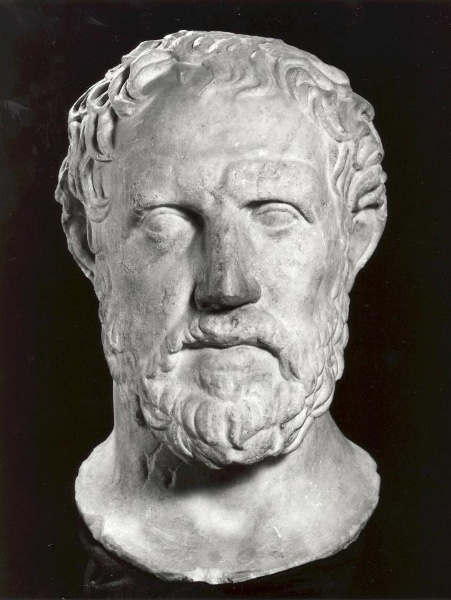
The tragic episode in Melian history in 416–415 BC gave rise to a famous passage in the work of Thucydides (ca. 460–395 BC), known as the «Melian Dialogue », which has been discussed by many philosophers and politicians ever since. Featuring Athenian strategists and representatives of Milos during talks on the eve of the siege, this dialogue presents an ideological debate on the exercise of imperial and coercive power.
The Athenians simply defend the right of the strongest as a law of nature, a position that could be described as Realpolitik and summed up in the famous phrase: « You know and we know, as practical men, that the question of justice arises only between parties equal in strength, and that the strong do what they can, and the weak submit » (Thucydides, The Peloponnesian War, V, 89-116). In contrast, the Melians defend the right to freedom and autonomy, based on considerations of morality and justice. However, this debate did not lead to negotiation: the Athenians maintained their ultimatum – surrender and pay tribute to Athens, or be destroyed – and the Melians chose to risk their fate and hope that Sparta would intervene on their behalf rather than give up their freedom.