Discover the island of Milos

The island of Milos
Ancient treasure

A strategic island

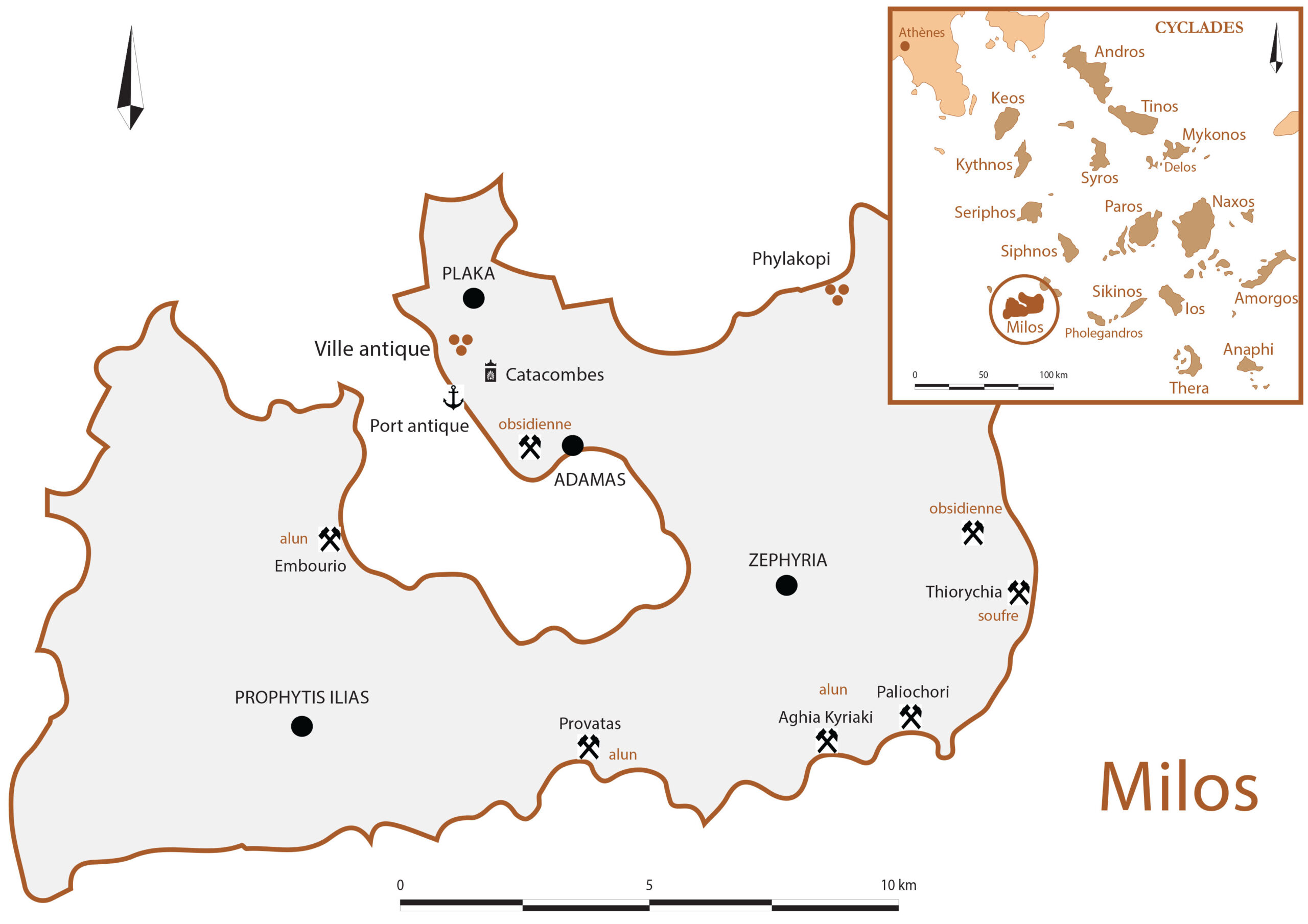
Milos, the fifth largest island in the Cyclades, stands out for its unique morphology, dominated by a vast natural gulf. Its strategic position on the Aegean sea routes and the exceptional wealth of its subsoil have ensured its continued importance since prehistoric times.

A Lacedaemonian foundation

According to ancient authors, the city of Milos was founded by the Lacedaemonians of the southern Peloponnese, as evidenced by the fact that the inhabitants of Milos spoke a Doric dialect, like those of the neighbouring island of Thera (now Santorini). The exact date of its foundation remains debated, but it probably occurred during the 9th or 8th century BC.
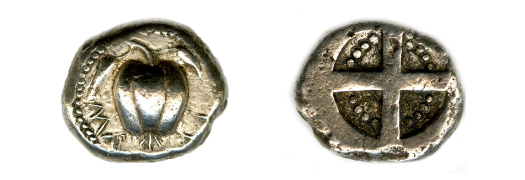
Among the earliest archaeological evidence of the city’s existence are funerary inscriptions and ceramic shards from the Archaic period, as well as coins dating from the late 6th century BC. These coins already bore on one side a fruit (pomegranate or quince), the symbol of the city – in ancient Greek, mèlon means ‘fruit’ – which also appears on coins from both the Classical and Roman imperial periods.

Ancient and archaeological sites on the island of Milos

(© E. Le Quéré)

Grenade fruit philomilos

Silver stater struck by the city of Milos, depicting a pomegranate or a quince on the obverse (c. 460–450 BC; 21 mm – 14.5 g)

(© The Trustees of the British Museum – CC BY-NC-SA 4.0; inv. no. 1165706001)

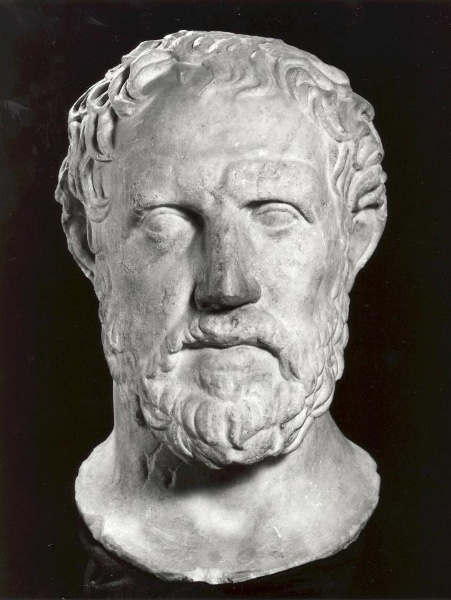
Marble bust of Thucydides, based on an original from the early 4th century BC

(© Royal Ontario Museum, n°957.159)

History of Milos

Thucydides


« Melian Dialogue »

The tragic episode in Melian history in 416–415 BC gave rise to a famous passage in the work of Thucydides (ca. 460–395 BC), known as the «Melian Dialogue », which has been discussed by many philosophers and politicians ever since. Featuring Athenian strategists and representatives of Milos during talks on the eve of the siege, this dialogue presents an ideological debate on the exercise of imperial and coercive power.
The Athenians simply defend the right of the strongest as a law of nature, a position that could be described as Realpolitik and summed up in the famous phrase: « You know and we know, as practical men, that the question of justice arises only between parties equal in strength, and that the strong do what they can, and the weak submit » (Thucydides, The Peloponnesian War, V, 89-116). In contrast, the Melians defend the right to freedom and autonomy, based on considerations of morality and justice. However, this debate did not lead to negotiation: the Athenians maintained their ultimatum – surrender and pay tribute to Athens, or be destroyed – and the Melians chose to risk their fate and hope that Sparta would intervene on their behalf rather than give up their freedom.